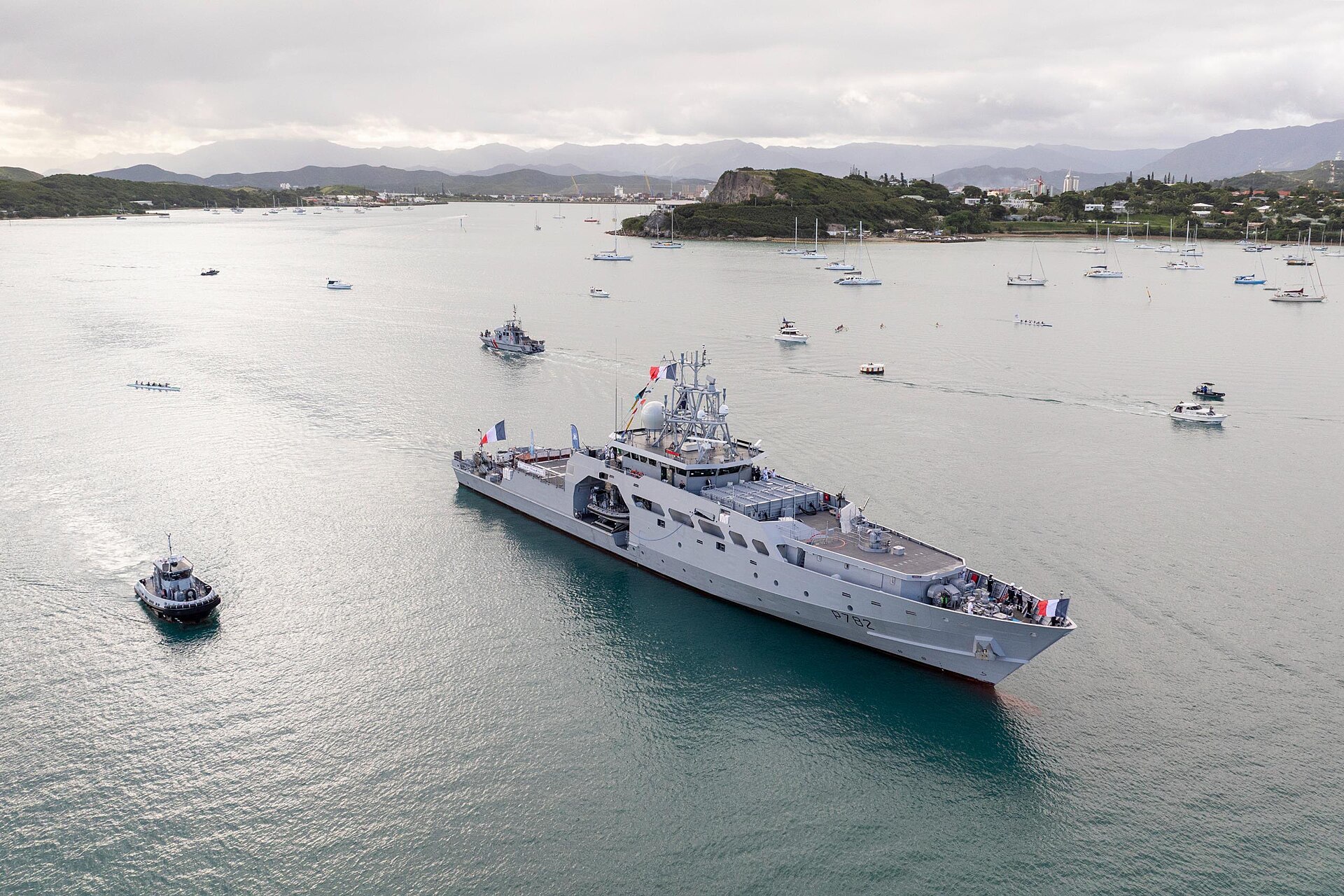
The freedom of the seas has contributed to the boom in sea transport which has steadily become the motor of the world economy. While it allows naval forces liberty of action, it also profits many whose activities are illicit. The Navy is the main actor in maritime security, and also has its part to play in crisis prevention and crisis management. The current naval re-equipment programme will allow France to meet these new challenges.
Naval Forces and Freedom of the Seas in the Twenty-First Century
As one of humanity’s common and precious assets, the sea has always provided men with great wealth. Concerns over the exploitation of fishing resources exist, but technological advances, the rise in oil prices and the future scarcity of some materials have been arousing renewed interest in undersea fossil and energy resources.
But the sea is first and foremost a privileged environment of exchange. Globalisation has merely increased interest in it, uniting all major powers. Maritime transport has undergone especially strong growth and now amounts to two-thirds of the global transport value, while 90 per cent of the European Union’s external trade transits by sea.
The sea remains the only global domain that permits true freedom of action, although the Montego Bay Convention introduced some limitations. Though coastal states possess exclusive economic rights to their territorial seas, in which they can explore, exploit and manage natural resources, as well as exercise jurisdiction over research activities, other states remain free to pass through or over these areas with ships or aircraft.
Il reste 92 % de l'article à lire