The evolution of the Law of the Sea, which gives countries new spaces of sovereignty and areas of jurisdiction without specifying their delimitation, is the source of the dispute between Greece and Turkey in the Aegean Sea. This article sets out possible solutions for the delimitation of territorial waters, the continental shelf and exclusive economic zones with reference to the established related jurisprudence and the practice of the states, while taking into consideration the equity and security requirements of both countries.
The Greco-Turkish Dispute over the Aegean Sea: a Possible Solution?
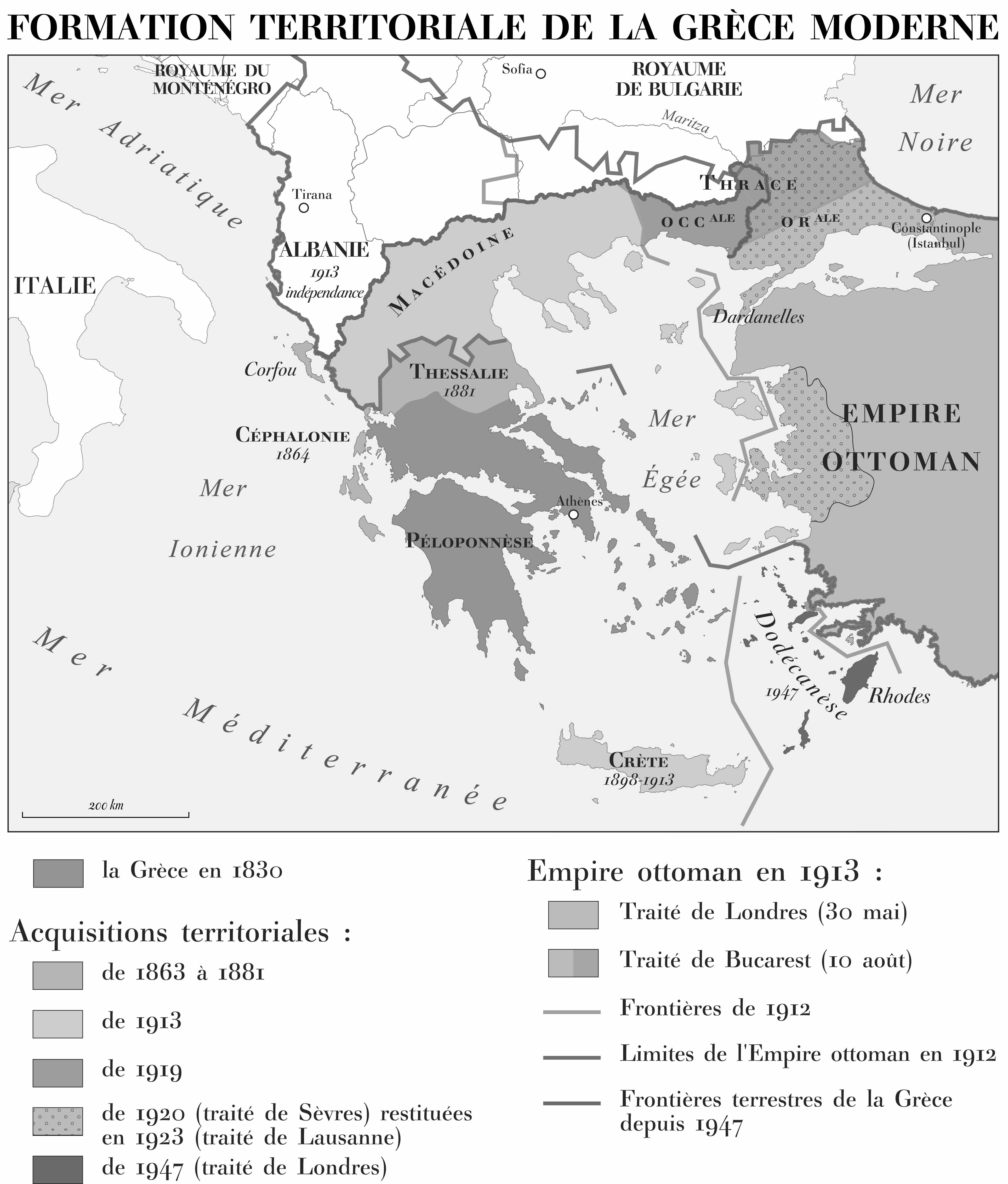
In the course of the last 40 years, Greece and Turkey have found themselves on the brink of war because of their basic opposition concerning the exercise of sovereignty on the waters of the Aegean Sea. Historical factors weigh heavily: Turkey lost most of its European territories in the nineteenth and twentieth centuries (see map), while Greece maintained cultural hegemony over the area as well as the shoreline of Anatolia since ancient times: Constantinople fell into the hands of the Ottomans five centuries earlier (1453) but the Greek populations remained until recently on the eastern bank of the Aegean Sea. The Treaty of Lausanne dated 24 July 1923 led to the flight of 1.3 million Greeks from the regions of Smyrna and Eastern Thrace, and of 400,000 Muslims who left Western Thrace to settle in Turkey. There are two opposing historical realities coupled with resentment.
The territorial division resulting from the Treaty of Lausanne(1) and the Treaty of Paris of 10 February 1947(2) seemed relatively stable; Greece logically had almost all of the islands of the Aegean Sea, populated by Greeks since ancient times. However, the evolution of international law, following the Second World War, and particularly after 1958,(3) has hampered the status quo.
Il reste 93 % de l'article à lire