At a time when the export of Dassault Aviation’s aircraft is being talked about again, the Rafale appears to be unquestionably the right answer to air forces’ requirements. Fitted with constantly evolving equipments, the aircraft represents a universal response to the different problems of interception, deterrence and support that France has to deal with.
Rafale—The Right Answer to Air Forces' Needs
History is written as it happens: re-reading it allows false impressions to be corrected. One such correction is that it was not industry but indeed the French government that drove the decision in August 1985 to develop a French combat aircraft independently, announced by the then Minister for Defence, Charles Hernu. France considered that the development specifications for production of a future combat aircraft in cooperation with other European countries did not match its own operational requirements, particularly with regard to its need for a multirole aircraft and a naval version. It should be noted that the French decision to go it alone was taken even though Dassault Aviation had bid for, and had already been awarded, the technical development of the European fighter. The European countries involved clearly recognised the expertise of Dassault’s design office, unequalled in Europe.
The national solution responded to the need for a multirole aircraft of around ten tons empty, which could replace all aircraft in service with the Air Force and the Navy. The list of aircraft to be replaced is long: Crusader, Super Étendard and Étendard IV P for the Navy, and Jaguar plus Mirage versions F1, 2000 (C, D and N) and IV P for the Air Force. This presented a real challenge, since Rafale had to be capable of conducting air superiority, air-to-ground strike, anti-shipping and reconnaissance action in a single mission, as well as being able to carry out highly specialised nuclear strike missions. Additionally, it had to be operable from both air bases and aircraft carriers. Rafale was intended to become the tool for rationalising air power, one aspect of the Ministry of Defence’s aim of increasing commonality between the various services to increase their operational effectiveness whilst maintaining service culture. This rationalisation was aimed at achieving a reduction in France’s combat aircraft fleet from more than 600 aircraft in 1995 to 300 in 2025. At the same time it is important to note that the overall cost of Rafale, a highly advanced, fourth-generation aircraft, is the same as that traditionally budgeted for any other combat aircraft programme. The programme was developed from the Rafale A demonstrator that had already been ordered as a test-bed for some of the innovative design features envisaged for the future combat aircraft, such as canard control surfaces. The Rafale A was the last prototype that Marcel Dassault lived to see assembled in his workshops, in 1986.
Launch of Rafale
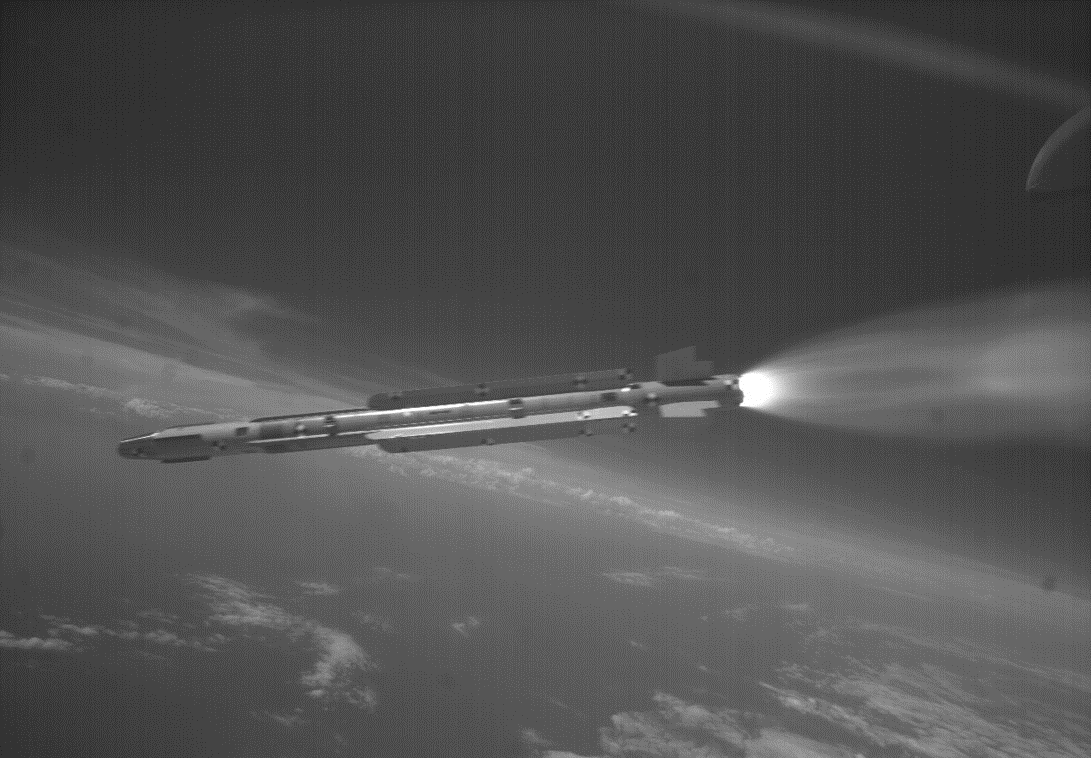
The Rafale programme was officially launched in 1988, and building started almost immediately on the air force and naval prototypes (C 01 and B 01, and M 01 and M 02 respectively). Priority was nevertheless given to the Rafale M, intended to replace the Crusaders, which were the first aircraft to be withdrawn from active service. The programme plan aimed at initial entry into naval service in 1996. In order to have an export version available as early as possible, in 1996 instead of 1998, the Government asked the companies concerned, Dassault Aviation, Thales and Safran, to support the Rafale development programme to the tune of 25 per cent, which amounted to e1.8 billion. In the event, this arrangement, unique of its type since it had never been employed elsewhere (especially in the United States, where the State alone funds development), was not successful since the French government did not honour its own commitment. Budgetary constraints had a significant effect on the programme to the extent that the first Rafale was delivered to the Navy in 2000, with a first operational squadron in 2004. The version optimised for export was first delivered to the Air Force in 2006.
Il reste 67 % de l'article à lire