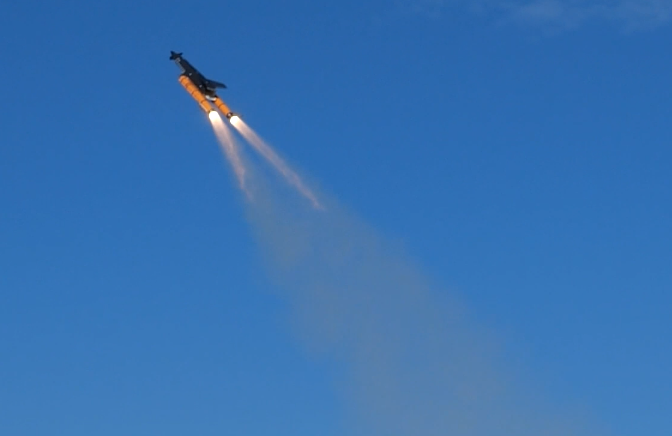
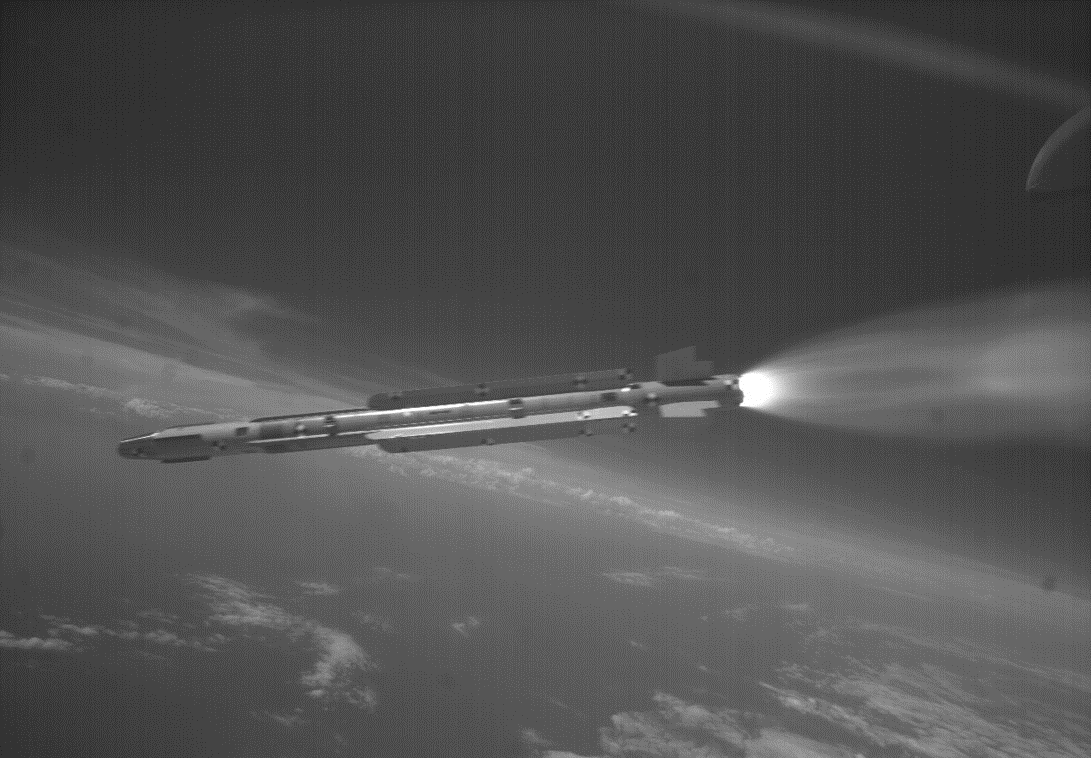
In this article the author presents the contribution made by the latest high-tech equipments to the air-land battle: UAVs (Sperwer), infantry communications (FELIN and its Battle Management System) and the AASM modular air-to-ground weapon, all of which are interoperable.
Air-Land Engagement: New Tools, New Strategies
Following 20 years of intense digital transformation, armed forces are heading into a new decade with dynamic new modernization measures, in response to the actions mandated by new defence and security policies. The primary requirement is in the harshest theatres of operation, for instance where NATO forces are deployed in the midst of populations, or in urban or battle-scarred environments where they face adversaries seasoned in harassing actions. In an operational environment combining sensors and effectors, high-precision weapons with controlled effects must be used in synergy with front-line ground troops.
Any investments in new weapons must obviously offer a significant operational benefit, especially in terms of enhanced protection, coordination and precision firepower, all keyed to neutralizing the adversary. The aim of violence management policies is to limit friendly fire and the risk of collateral damage—a requirement that is all the more critical since winning the support of the local populations is one of the challenges of the original engagement. NATO forces observed this in the Balkans in the 1990s, and they are now experiencing the same thing in Afghanistan. In the following pages we show how the latest technologies can play a positive role in terms of force engagement.
In-Depth Observation and Target Designation
Europe offers technological independence for tactical UAVs (unmanned aerial vehicles), through the Sperwer UAV system produced in France. Sperwer systems are already deployed by France as well as several other European countries, namely Sweden, Greece and the Netherlands. Operating close to troops from a mobile ground control station, the Sperwer system was designed from the outset to meet the needs of artillery units, offering world-class performance in ground target identification and location. As an integral part of the digital battlefield, the Sperwer tactical UAV system is designed to be incorporated in command and coordination chains. The precision information collected through this system is used for artillery pointing, aircraft guidance, and even the programming of precision air-to-ground weapons. Sperwer UAVs can be operated around the clock, as in Afghanistan today, offering very-high-resolution observation capabilities that support a short-loop Observe, Orient, Decide, Act process. Transported to conflict zones by relatively small aircraft, the Sperwer’s gyrostabilized optronic sensor acquires high-resolution images of targets, along with precise coordinates. These are then transmitted in real time to a command and control chain, in particular artillery systems and armed forces information systems (for example, in France, Atlas and SIC-F, respectively).
Il reste 74 % de l'article à lire